

Time for another Shoddy Goods, the newsletter from Meh about consumer culture, with me, Jason Toon. I was a vegetarian for 20 years, so I understand that those of you with misgivings about meat may want to pass on this very carnivorous issue…
As I’ve written before, Australian life isn’t drastically different from life in the USA… until it is. Like when you have to slow down because the road is covered in cockatoos, or you’re surprised by what everyone does after they sing “Happy Birthday”, or lamb is on the menu for dinner. And lunch. And sometimes breakfast.
Australia and New Zealand are famously sheep-happy nations, so I shouldn’t have been surprised. But I’d never had lamb in my life, or even been anywhere it was being served. It seemed like something people used to eat: I could imagine June Cleaver buying a leg of lamb at the grocery store more easily than I could imagine my mom serving one up.
How did two countries with such similar cultural roots and current lifestyles reach such different conclusions about one of humanity’s basic meats?
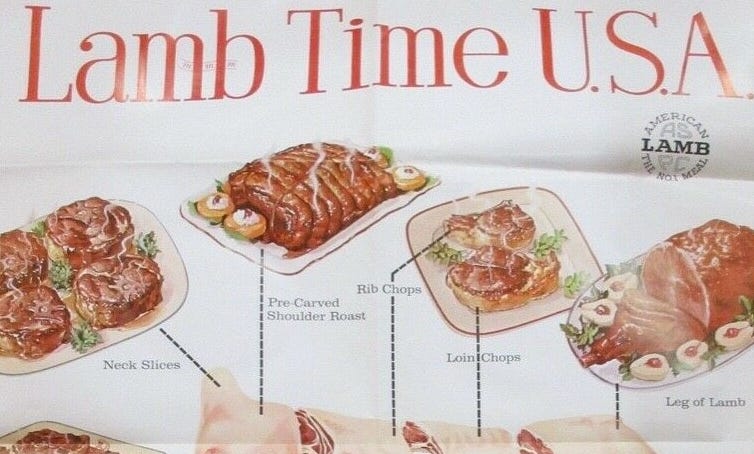
Blip blip black sheep
Turns out it’s not just me: by global standards, Americans eat hardly any lamb (and its grown-up version, mutton), and Aussies eat heaps of it. The OECD average for per-capita sheep meat consumption in 2024 was 2.4 pounds a year. In Australia, it’s 16.3 pounds, while in the USA, it’s 0.88 pounds. Compared to the 100 pounds of chicken, 60 pounds of beef, and 50 pounds of pork the average American eats annually, lamb is a blip.
If anything, that 0.88-pound average overstates lamb’s popularity in America, because consumption tends to be concentrated in immigrant communities from sheep-eating countries. One study found that 50% of Americans have never tried lamb even once, and most of those who eat it only do so once a year, at Easter. “The Northeast, with its high concentrations of Middle Eastern, Caribbean, and African consumers, is a major market for lamb products,” says the US Department of Agriculture. “The typical lamb consumer is an older, relatively well-established ethnic individual who lives in a metropolitan area.”
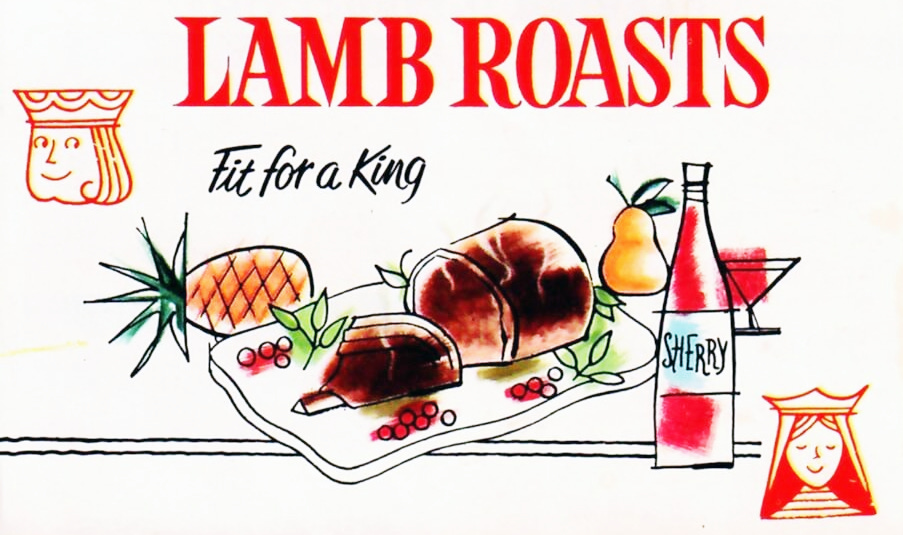
My sense that lamb used to be more popular in the United States is also borne out by the numbers. In 1960, the average American ate 5 pounds of lamb a year. It’s never been one of the most popular meats in America: a 1924 Better Homes & Gardens article observed that “few housewives are acquainted with [lamb] cuts other than the leg and ribs. There is no well-founded reason for this unpopularity.” But lamb was in the mix far beyond where it is today.
Not a matter of taste
The various theories for how this came to be range from the inherent and personal - Americans just don’t like the taste, lambs are too cute to eat, etc. - to the external and macroeconomic, citing climates, lifestyle patterns, and the livestock industry.
The subjective ones are easier to shrug off. It’s true that lamb has a strong, distinctive taste. Trying to describe flavors is like trying to paint grammar: the oft-cited “gamey” isn’t exactly right. “Earthier” is closer but still not it, exactly. Lamb has a, let’s say, robust flavor that takes some getting used to if you didn’t grow up with it. But there’s no reason to think that Americans and Australians (or Greeks, or Turks, etc.) are so biologically different that one can love lamb and the other can only hate it. There is no known “cilantro gene” for lamb.
One variant of that theory says that American soldiers in either World War I or World War II were subjected to so much low-grade canned mutton that they rebelled against the idea of eating sheep ever again. But this extensive Wikipedia article on US military rations only mentions one “experimental” mutton ration that was quickly discontinued. The other rations cited as widely loathed, like beef hash and ham with lima beans, didn’t hurt those meats’ popularity.
As for lambs being cute, I tend to think that first we decide which animals are for eating, then which animals are for cuddling. Cows and pigs can be pretty darn cute, too, and we eat plenty of those. But I’ll allow that the fact that meat lambs are killed when they’re under a year old probably hasn’t helped, in the same way that US veal consumption has all but collapsed. Then again, that doesn’t explain Americans’ disinterest in mutton, made from adult sheep.
All in all, I’m skeptical of subjective, “it’s a matter of taste” explanations for large-scale consumption anomalies like the absence of sheep from the American table.
Cow vs. sheep
One reason often cited for the difference between the US and Australia is that the latter’s climate and land is just more suited for raising sheep. Again, it doesn’t quite hold up: both countries have vast swathes of the semi-arid grassland where sheep thrive. That’s why there were some 45 million sheep in the US in 1867, rising to a peak of 56.2 million in 1942, before declining to something like 5 million today.
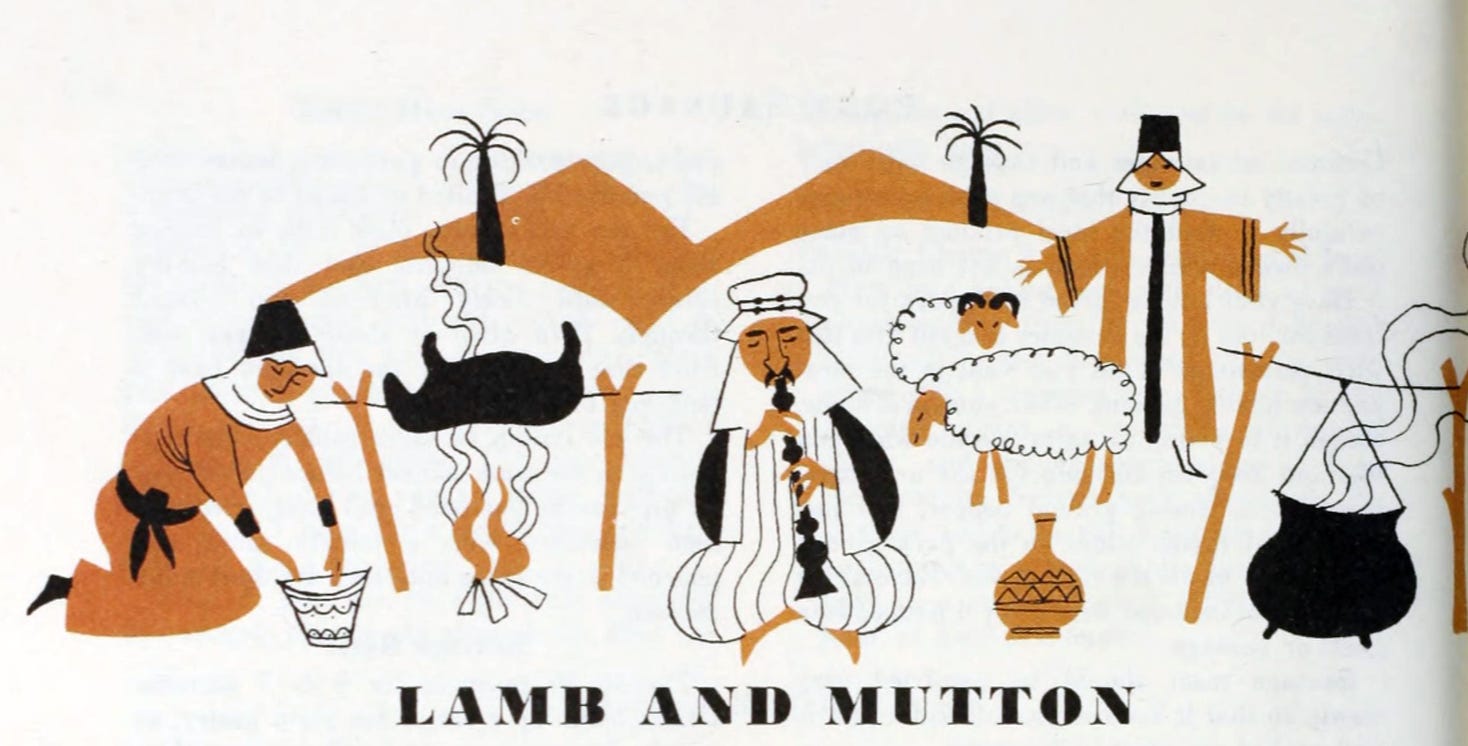
But meat wasn’t behind the raising of all those sheep. The wool was the main attraction. For a long time, the sheep meat industry in the US was a sideshow to the much bigger wool industry. Every spring, herders culled unneeded young male sheep by sending them to slaughterhouses, but the real money was in wool - until synthetic fibers came along after World War II. Wool prices collapsed, and thus so did the profitability of sheep.
That was enough to tip the economics of pasture animals decisively toward cows. “There were cattle producers and sheep producers side by side in most areas,” economic historian P.J. Hill, who grew up on a sheep ranch in Montana, said in 1993. “Very seldom was it the rule that either cattle or sheep dominated. But it doesn’t take tremendous shifts in either input or output prices to shift production from one to the other.”
Of course, nothing succeeds like success. Once the beef industry started to get the upper hand on its pastoral rival, it parlayed that strength into further advantages, from friendlier federal grazing regulations to promoting beef as a quintessential part of American culture.
Pasture prime
Sad to say, the loyalty of some ethnic communities to lamb didn’t help its acceptance in the wider US market. “Sheep also came to be seen as a meat for immigrants, particularly those from southern and eastern Europe, who were America’s most reliable lamb eaters,” writes economic history professor Iker Saitua. “American Indian tribes, particularly in Navajo country, also embraced lamb. These social and ethnic associations with sheep meat cemented its outsider status. Meanwhile, the meatpacking industry promoted beef as quintessentially American.”
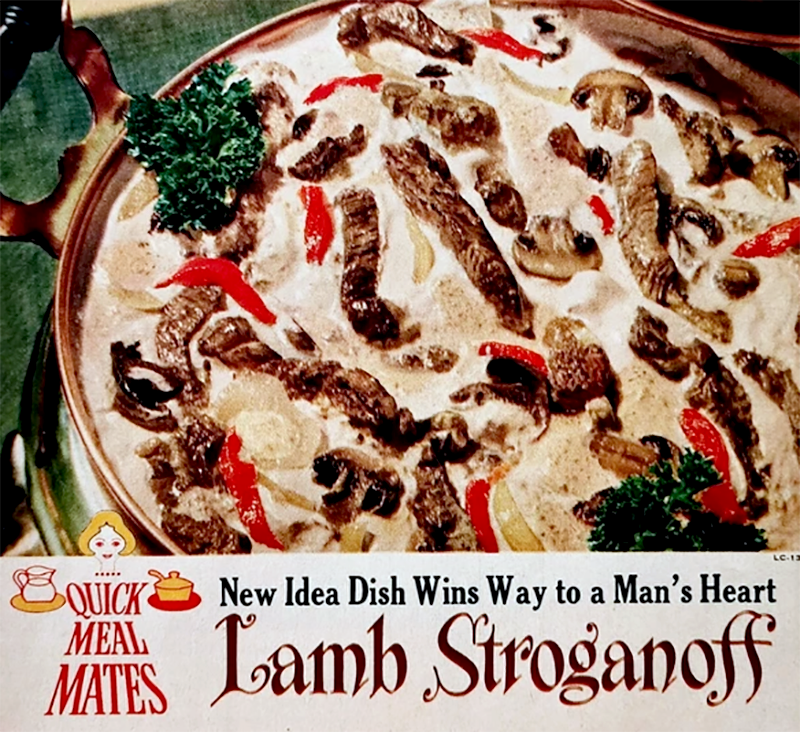
Sheep meat started a downward spiral where low supply meant higher prices, which lowered demand, which led to even lower supply, and so on. In the postwar years, the USA was a net exporter of sheep meat. Now over half of lamb consumed in America is imported from Australia and New Zealand, which only adds to the price.
If you’re an immigrant and a food is essential to your culture, you’ll pay whatever it costs. I don’t want to tell you what I’ve paid for an imported can of Libby’s pumpkin around Thanksgiving. But high lamb prices mean it’s likely to remain a specialized taste. Who wants to gamble a premium price on a weird meat you’ve never had before, possibly shipped from around the world, when you could just buy reliably delicious steak raised in the next county?
So despite the wishful optimism of the American Lamb Board, lamb is probably long past the point of no return in America. Its economically driven decline has hardened into “a social sense of rejection toward sheep meat,” as Saitua puts it, that just doesn’t exist in Australia. Chalk it up to one more little difference between my two countries… anybody want to trade some lamb for a can of pumpkin?
I just passed my 35th year of being vegetarian, but I do think I ate lamb once or twice…around Easter, maybe? It is weird it’s just disappeared. I’ve always wondered what happened to people eating a goose for the holidays as well.
How about you, ever had lamb? Alligator? Octopus? Frog’s legs? Or if you’re vegetarian, any unusual vegetables? Let’s talk weird food in this week’s Shoddy Good chat.
—Dave (and the rest of Meh)
These past Shoddy Goods stories are a low-fat, zero-cholesterol, cage-free alternative to eating food: