

UFOs are real bland: Shoddy Goods 094
What is this candy? And why is this candy?
I’m Jason Toon and I love candy deeply… and I hurt just as deeply when it disappointments me. I’m using this Shoddy Goods, the newsletter from Meh about consumer culture, to try to come to terms with one of the most heartbreaking candies of all.
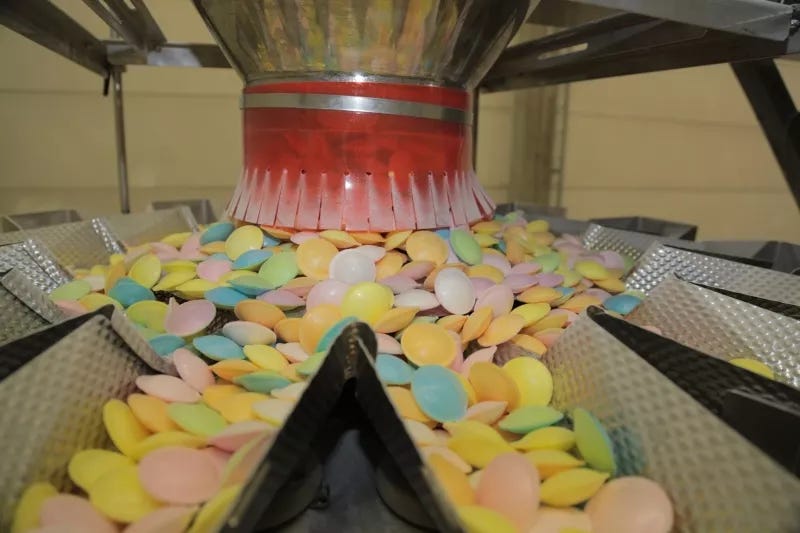
I’m just old enough to remember all those old-timey candies that seemed more like industrial waste byproducts. Bland flavors, off-putting colors, challenging textures… isn’t candy supposed to be fun? We’ve talked about peanut butter kisses before; Bit o’ Honey and Necco Wafers also had a distinct “extrusion leftovers” vibe. Most baffling of them all have to be the pastel pods of disillusionment known variously as flying saucers, satellite wafers, UFOs, or, in the Dutch of their native Flanders, zure ouwels (”sour wafers”).
The completely flavorless rice-paper shell has the mouthfeel of Styrofoam, at least for the first two seconds after making contact with your saliva, before it dissolves into a pasty goo. Inside is either a mouthful of candy powder (more common in Europe) or a bunch of rock-hard, also almost flavorless round sprinkles (the American style). Mmm, mushy and gritty! OK, the colors are nice. But otherwise it’s hard to understand how any part of this experience is meant to be pleasant.
Or maybe it’s just me. Flying saucers were named the 12th most favorite sweet in Britain in a 2009 survey, and they’re officially considered a Flemish heritage product in the Belgian region where they were invented. But while I grudgingly admit they may not be actual factory debris, satellite wafers did start out as a product made for a completely different reason. They were only repurposed as “sweets” for kids when nobody else wanted them.
Last communion
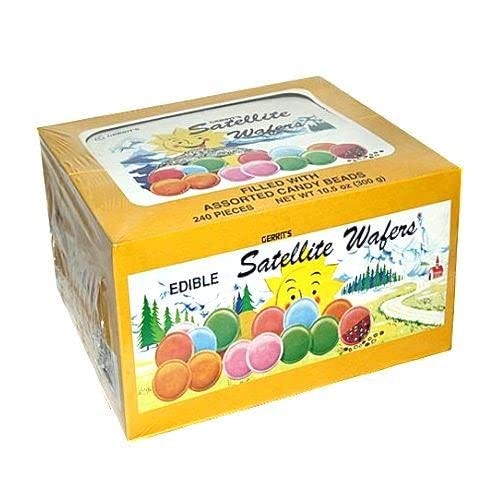
Like all the most fun candies, this one starts with the decline of Western European religious belief following World War II. It seems a venerable firm in Antwerp, Belgium called Belgica was having trouble selling the communion wafers they produced. So in 1951, they hit on the idea of putting two wafers together into a round capsule. Inside, they were filled with a sour candy powder, a then-popular candy genre which also showed up in the US as products like Lik-M-Aid Fun Dip (speaking of low-effort industrial sweets). Ziezo! Zure ouwels were born.
I guess wartime austerity had done a number on the European sweet tooth, because this ascetic treat was embraced by a grateful continent. In the UK and Ireland, these flying saucers were filled with sherbet powder, a fizzier concoction. The American version changed that filling to multicolored nonpareils, tiny round sprinkles that also feature as the “snow” on Sno-Caps. I don’t recommend them to anyone who would like to keep their real teeth.
In my dim memories of the turn of the 1970s into the 1980s, flying saucers still haunted the dusty shelves of old-school corner stores, along with other superannuated candy you never saw commercials for: Swedish fish, candy buttons, candy necklaces, wax “cola bottles”, wax lips. Somebody back then was really trying to get kids to eat wax for some reason.
Like its peers, flying saucers faded as big-budget candy brands crowded them out, and the candy stores and neighborhood markets that carried them disappeared. And then they made a bit of a comeback in the 2000s as a retro-sweets trend was driven by indie vintage candy shops, newfound availability on the Internet, and Boomer/Gen X nostalgia.
Now Amazon will deliver a drum of Fizzy UFOs to your door. But opinions about this bastard offspring of church and industry remain, let’s say, mixed.
“I have no idea why anyone buys these”
In a video titled “The Most Boring Candy Ever“, a singularly unenthused YouTube reviewer raves “It was about time that I try this candy I have zero interest in… it smells like packing peanuts… it’s literally flavorless sugary sprinkle beads in a flavorless non-sugary wafer… I would love to meet the person that says this is their favorite candy.”
A commenter adds, “When I worked at World Market, they were trying to get rid of these for at least a year and nobody would buy them even at 50% off.”
Elsewhere in retail: “A sweet in our store that I have no idea why anyone buys: flying saucers,” concurs someone from the Scottish candy store Joe’s Sweetie Barn on Instagram. “Sherbet on the inside, rice paper on the outside. Overall, just bland.” And this is from a store that sells them.
Flying saucers do have their fans - 49% of Britons can’t all be lying. “I genuinely don’t care what people say, these are so good,” says Redditor Crow-Time, turning a bug into a feature. “It’s like communion wafers with sprinkles inside, I love it.” But even there, the comments are overwhelmingly along the lines of “Think of chewing on a packing peanut minus the thickness with a little bit of ice cream hard ball sprinkles inside. There is zero sweetness and zero taste in the disc itself.”
If you swear by flying saucers, I’m baffled, but also a little jealous. I wish I had the ability to be happy with so little. I wish my tastebuds weren’t blown out by decades of fructose abuse. I wish I could strike the contrarian pose that flying saucers are “good, actually.” Part of me wants to connect on that visceral level with our forebears from a simpler time. But that part is definitely not my tongue.
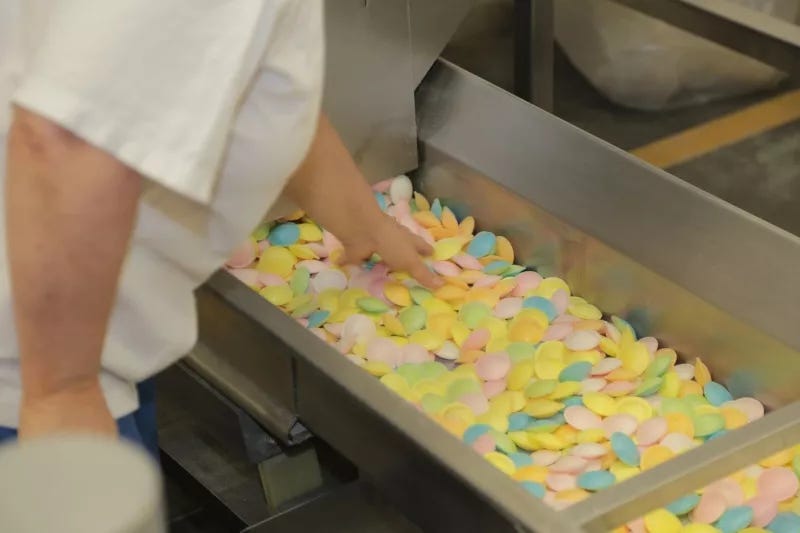
I think the powdery chalkiness of the candy hearts on Valentine's Day are my most "pretty gross but I still fondly remember them" candies. What food do you have nostalgia for despite objectively having to admit it doesn't actually taste good? Let's hear about it in this week's Shoddy Goods chat.
—Dave (and the rest of Meh)
We promise these previous Shoddy Goods stories aren’t that much like biting into a packing peanut:
And if you like Shoddy Goods, don’t miss Jason’s new other newsletter, Gnomenclature. Every week he digs into the 178-year-history of Hammacher Schlemmer, America’s oddest retailer. It’s gonna get weird!