

If million-dollar ideas were easy, we’d all be millionaires. Jason Toon here with another Shoddy Goods, the newsletter from Meh about consumer culture. This time we look at one such business model that was obsolete almost as soon as it premiered.
The early days of home-video rental were a free-for-all. I don’t just mean the format wars between VHS and Beta. When my family briefly had a VCR in 1981, we had to rent movies literally from some guy’s basement. Appliance stores soon stepped into the breach, with video rentals as bait to sell VCRs and TVs. Then, in the space of a few years, my neighborhood in St. Louis went from zero dedicated video stores, to a dozen, back down to two.
Into this Wild West village came riding a passel of hungry outfits, each sure they’d figured out how to serve the vast majority of American households who would never be able to afford $1200 for a pricey VCR. All these hopefuls learned an expensive lesson in the risks of betting on today’s technology in tomorrow’s market.
Be kind, don’t rewind
The first commercial VCRs were revolutionary, but freedom from the tyranny of TV scheduling came at a dear price. When the Betamax player was released in 1975, it retailed for $2,295 - almost $14,000 in today’s dollars. Two years later, the more reasonable VHS player debuted at $1,200, still a whopping $6,400 today. Prices didn’t moderate much by the turn of the decade, with either type setting you back a grand or so.
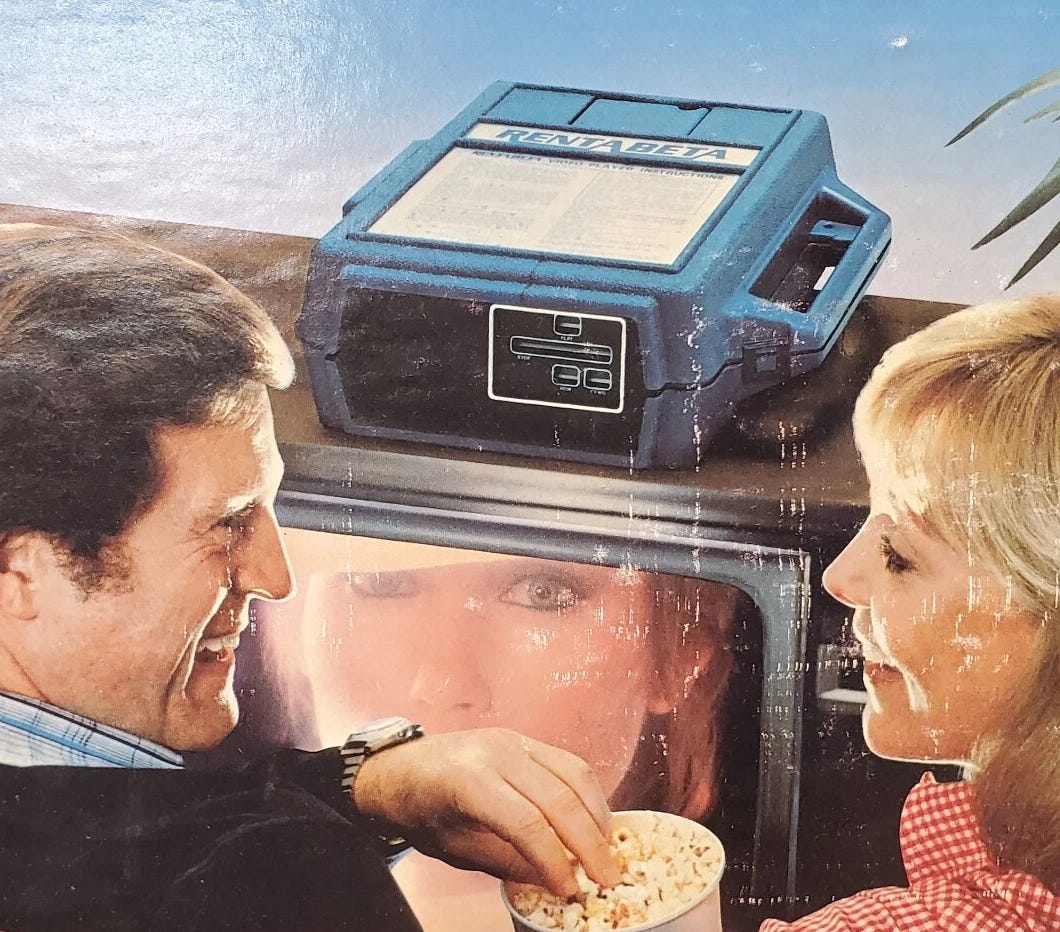
So in 1981, Superscope, a South California electronics company best known for their Marantz audio components, announced Rentabeta. For $12 on weekday nights or $15 on weekends, customers could go into the Rentabeta outlet near them - generally the same hi-fi stores that already stocked Superscope products - and take home a videotape player for the night with the movie of their choice locked inside.
But not just any video tape player. The Rentabeta machine was a rugged blue plastic thing with a handle, like a typewriter case, that weighed some 16 pounds. All the functions except play, pause, and stop were disabled - including rewind. You got one play for your money, and if you missed something, too bad. Rent it again. As for using the Rentabeta player to watch any other tapes? Forget it. You were limited to the 25 or so titles stocked by each outlet.
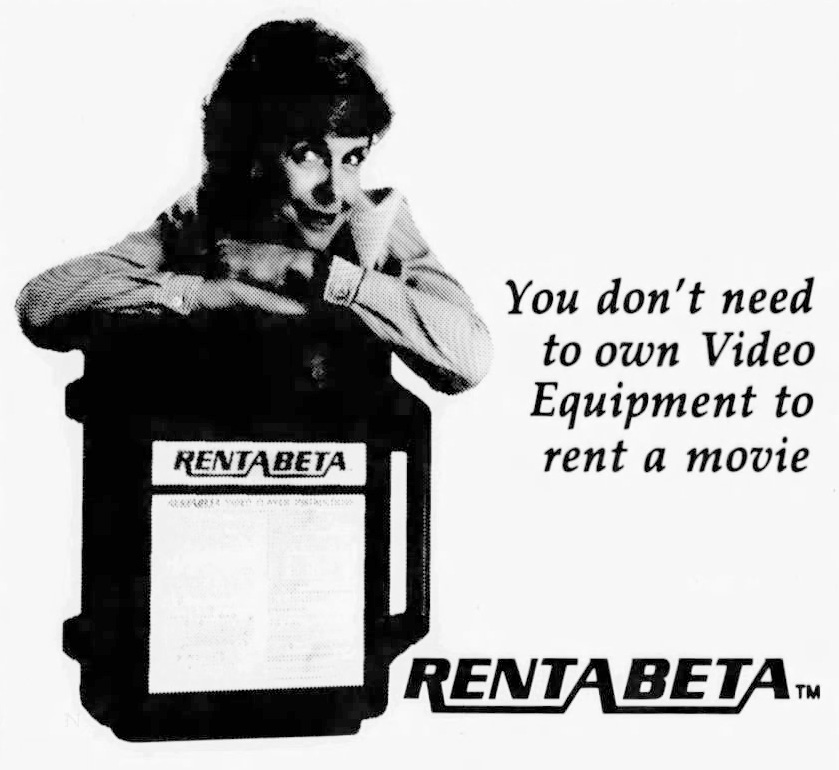
“The key to this plan is freedom of choice and affordable prices,” said Superscope founder and president Joe Tushinsky, apparently with a straight face. Fifteen bucks for one at-home viewing at a time when an average movie ticket was less than $3 seems like hard math to square - but Tushinsky wasn’t the only one who thought it added up.
(Speaking of adding up, you can add a bunch of outlets and USB ports with this four-pack of wall-taps today at a crazy low price on Meh. Buy a bunch and get our boss off our back!)
“Nobody can catch us”
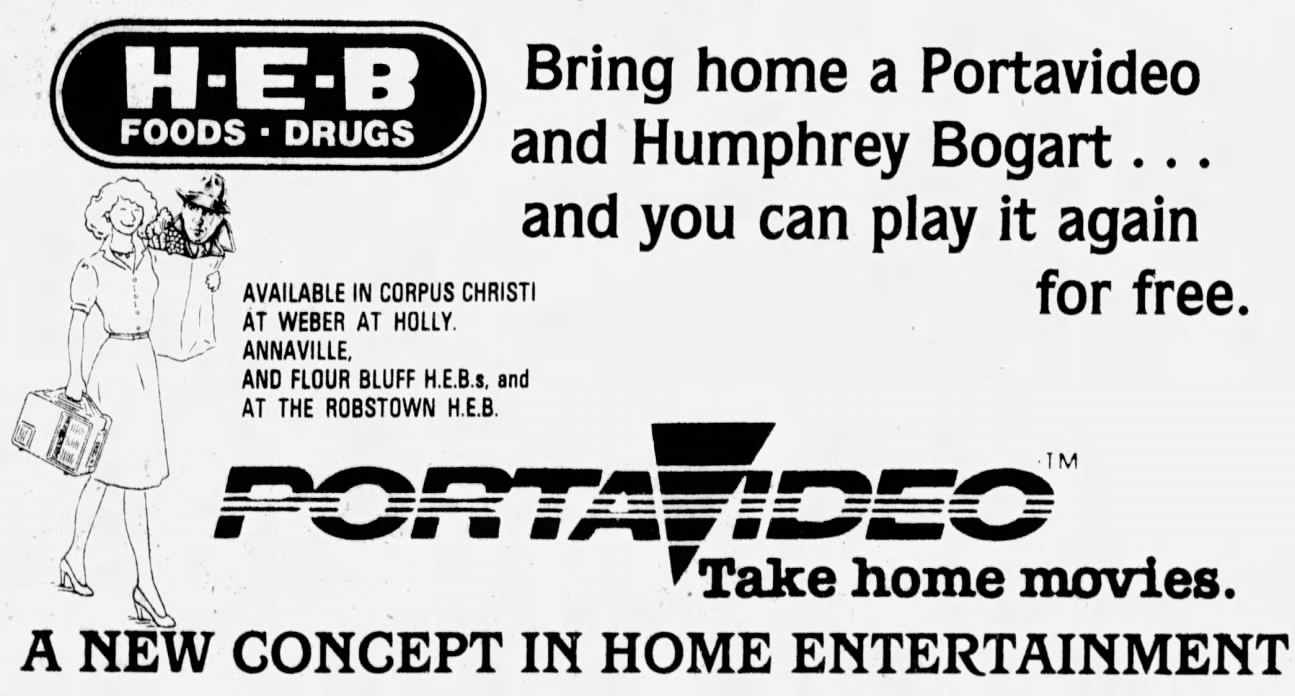
In 1983, Phoenix-based Portavideo rolled out its own plastic-encased rental player, but without the one-movie, one-viewing restrictions of Rentabeta. “Bring home a Portavideo and Humphrey Bogart… and you can play it again for free,” their ads promised.
“Portavideo will be in every neighborhood in America within 18 months to two years,” the company’s vice-president of marketing, Joe Bowman, told the San Francisco Chronicle in 1983. “Nobody can catch us. We want to be the Hertz of the business, though there’s certainly room for an Avis or two.”
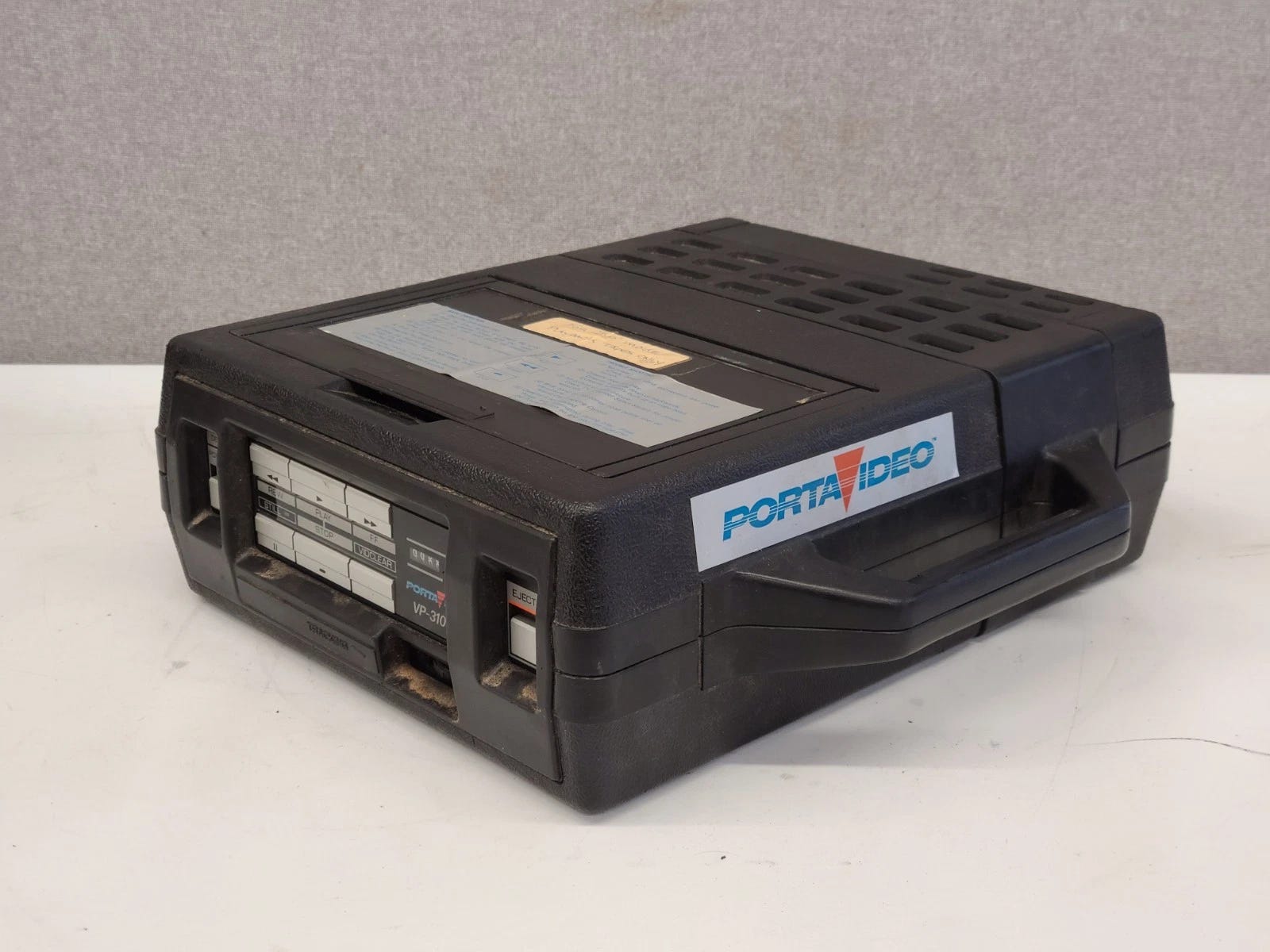
Some of those “Avises” are quoted in the same story, including Rentabeta, whose general manager Howard Siegel says “We will see tremendous growth in the next couple of years.” Meanwhile, a Bay Area company called Movie Machine claimed “We have about 3,500 machines out there now, and we’ve really just started the attack,” in the words of their marketing director, Richard Vigo.
A Rentabeta distributor named Louis Snyder sums it up: “The video explosion is finally reaching the masses through the rental industry. For the first time, we are making the VCR affordable to everybody.”
Problem was, falling VCR retail prices were making it even more affordable to buy one.
“No longer a novelty”
The first basic VCRs under $300 hit the market in 1984, with the average midrange VCR priced around $500, according to the New York Times. “It’s no longer a novelty, something for only the affluent or the videophile,’‘ said Frank McCann, vice president of the RCA Corporation’s consumer electronics division.
Annual VCR sales through the early ‘80s almost doubled from year to year. From the estimated 2% of US households who had a VCR in 1980, that number was 14% by 1984, 33% by 1986, and 62% by 1989.
To compete, VCR rental prices fell, too. Rentabeta and Portavideo each had to maintain a mountain of finicky rental VCRs and fleets of trucks to shuttle units between franchise locations and local service centers. That’s a lot of overhead. Prices could only go so low, and customers could do the math: why spend even $8 for one night with a VCR when you could buy one for $299 and use it every night, plus tape shows off of TV?
The math caught up with them. Rentabeta seems to have fizzled out in 1985, as Superscope dumped its less profitable assets (essentially everything but Marantz). Portavideo held on a few years longer, popping up in video store ads into 1989, but Joe Bowman’s big dreams never came close to reality.
I’m sure there was a moment when renting VCRs seemed like a brilliant idea. Nowadays, we all expect electronics to get cheaper over time, but the VCR was the first mass consumer technology to set that expectation. An old-school generation of hustlers - Superscope’s Tushinsky was born in 1910 - learned the hard way that business doesn’t have a rewind button, either.
We definitely rented a VCR at least once in the 80s. I remember steep fees if you didn’t rewind the movie—unfortunately we didn’t realize you should hit stop and then rewind. So we sat there, holding the rewind button down on our first rental, Yentl, watching as a reversing young Barbra Streisand travels to Easten Europe and starts dressing as a boy.
Do you remember your first home movie rental? How early was your family on getting new tech and electronics? Let’s hear about it in this week’s Shoddy Goods chat.
—Dave (and the rest of Meh)
Now that you’ve enjoyed our new release, cue up one of these past Shoddy Goods stories: