

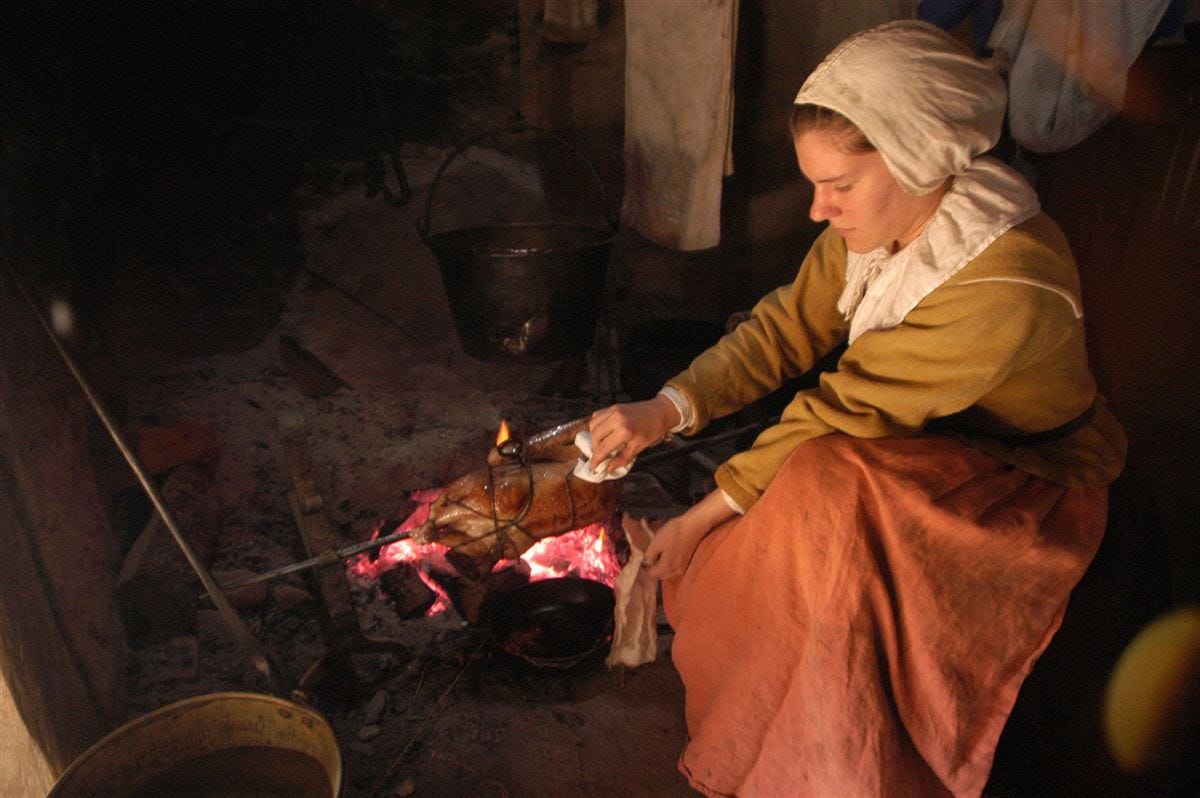
Happy Thanksgiving! I’m Jason Toon, and this Shoddy Goods, the newsletter from Meh about consumer culture, is my contribution to your feast: something to talk about that doesn’t involve politics, religion, or real estate.
At its core, the standard Thanksgiving dinner has changed remarkably little over the last century or two. Whether it’s an 1890 newspaper column, or a 1918 naval hospital menu, or a 1944 restaurant ad, you’re likely to find the turkey, stuffing, cranberry sauce, and potatoes you expect. That’s what traditions are, right?
But dig a little deeper, poke around the margins of the table, and you’ll discover a whole smorgasbord of more unexpected selections that were once considered essential Thanksgiving dishes by someone, somewhere. Some gained their status by being easily available local produce from New England, where the holiday took shape. Some were British festive staples shifted to this new North American occasion. And some, well, we’re not sure where they came from. Pull up a chair, tuck in your bib, and enjoy this alternative but equally traditional Thanksgiving feast.
Oysters
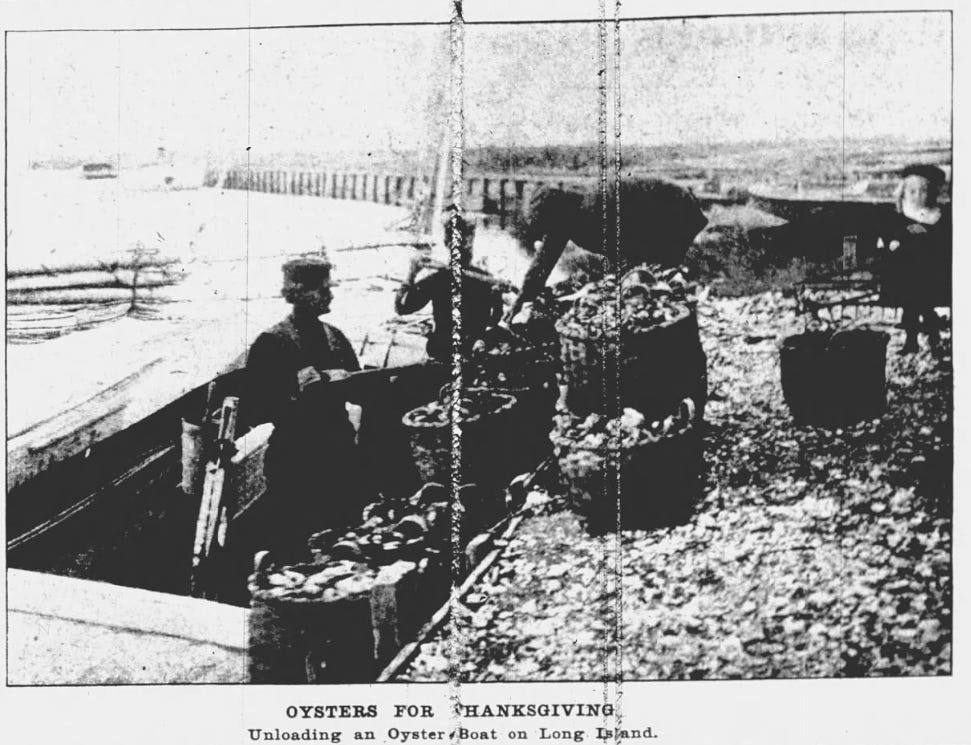
As a nation, we once ate a lot more oysters at all times of year. Their prevalence in the northeast, especially in the fall, made them an early and enduring Thanksgiving staple. “Coastal Native People had harvested oysters from early times,” write Kathleen Curtin and Sandra L. Oliver in Giving Thanks: Thanksgiving Recipes and History, from Pilgrims to Pumpkin Pie. By the mid-1800s, they explain that along with a growing craze for raw oysters, “recipes abounded for oyster soup, oyster stew, and oyster sauce, a fashionable accompaniment to fowl, including turkey.” Oyster sauce recipes especially seem to have persisted for at least a century more. The oyster dressing still popular in the Southern and Mid-Atlantic states is an echo of this shellfish’s bygone supremacy.
Celery
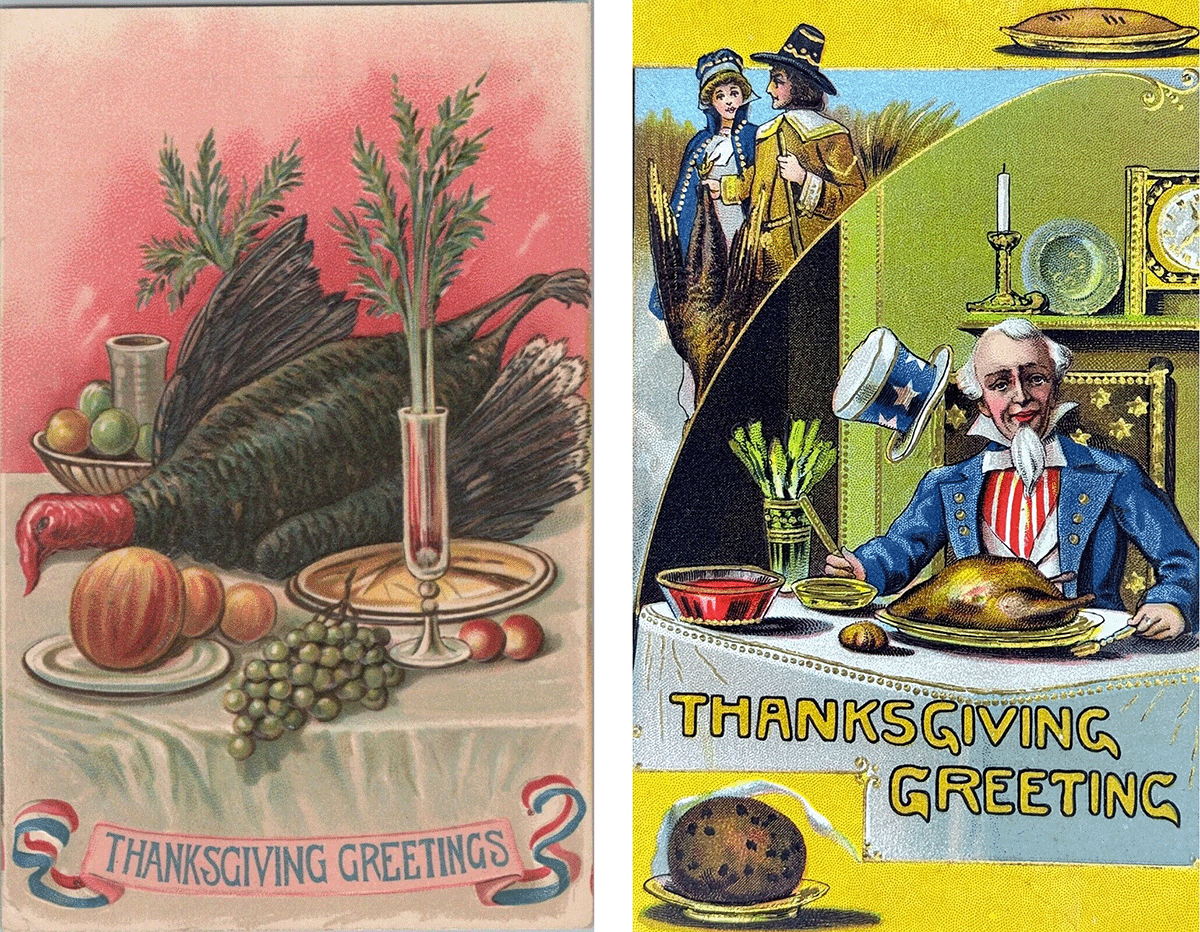
Another onetime regular demoted to a supporting role, celery lives on in stuffing and on the veggie tray. But a bundle of fresh celery stalks on the Thanksgiving table was once as essential as a tree at Christmas. Special glass vessels, called celery vases, were manufactured just for the purpose; an 1859 table setting guide specifies where to put one. “How celery came to be part of the Thanksgiving dinner is not precisely clear, but its presence was a fixed institution,” writes Diana Karter Appelbaum in her book Thanksgiving: An American Holiday, An American History. One theory is that the difficulty of cultivating pristine celery stalks made them a symbol of bounty and affluence; another is that, conversely, celery was the brightest, freshest salad vegetable still available by the end of November. In any case, as celery became more humdrum, its turn in the spotlight came to an end.
Goose, duck, or venison
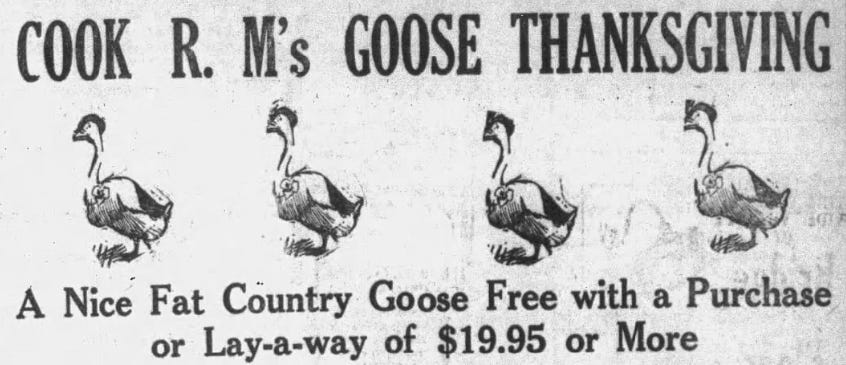
The roasted centerpiece of Thanksgiving is where it comes nearest to unanimity, but even here, the turkey has not gone unchallenged. For one thing, it’s more likely that goose and duck were served at the first Plymouth feast in 1621; the sole eyewitness account refers to “fowl”, of which migrating water birds were most numerous in the area in autumn. Venison was definitely on the menu, as five deer were brought by the native Wampanoags. For the next few hundred years, accounts of fattening up a goose for Thanksgiving were commonplace. American grocers advertised Thanksgiving goose as late as the 1960s. There appears to have been a push for a goose comeback in 1977, as several newspapers ran the same recipe, photo, and historical factoids, doubtless provided by some PR agent for the goose industry. But commercial goose meat never caught on the US the way it has in Europe, and its Thanksgiving history remains mostly just history.
Creamed cauliflower
This unsung veggie side has a remarkably long presence in Thanksgiving’s historical record. The aforementioned 1890 newspaper recipe, from the Pittsburgh Dispatch, is just boiled cauliflower served with an unspecified “cream sauce”. Variations on the theme - with bacon, or served on toast, or “au gratin“ (baked with cheese), or “a la Polonaise“ (with breadcrumbs and eggs) - would pop up regularly on Thanksgiving menus deep into the 1970s. One senior citizen, Ruth Faulkner, shared some childhood Thanksgiving reminiscences in the Marion (Ohio) Star in 1994 which offer some insight into why creamed cauliflower was fading away: “Oh, how I hated it.”
Plum pudding and mincemeat pies
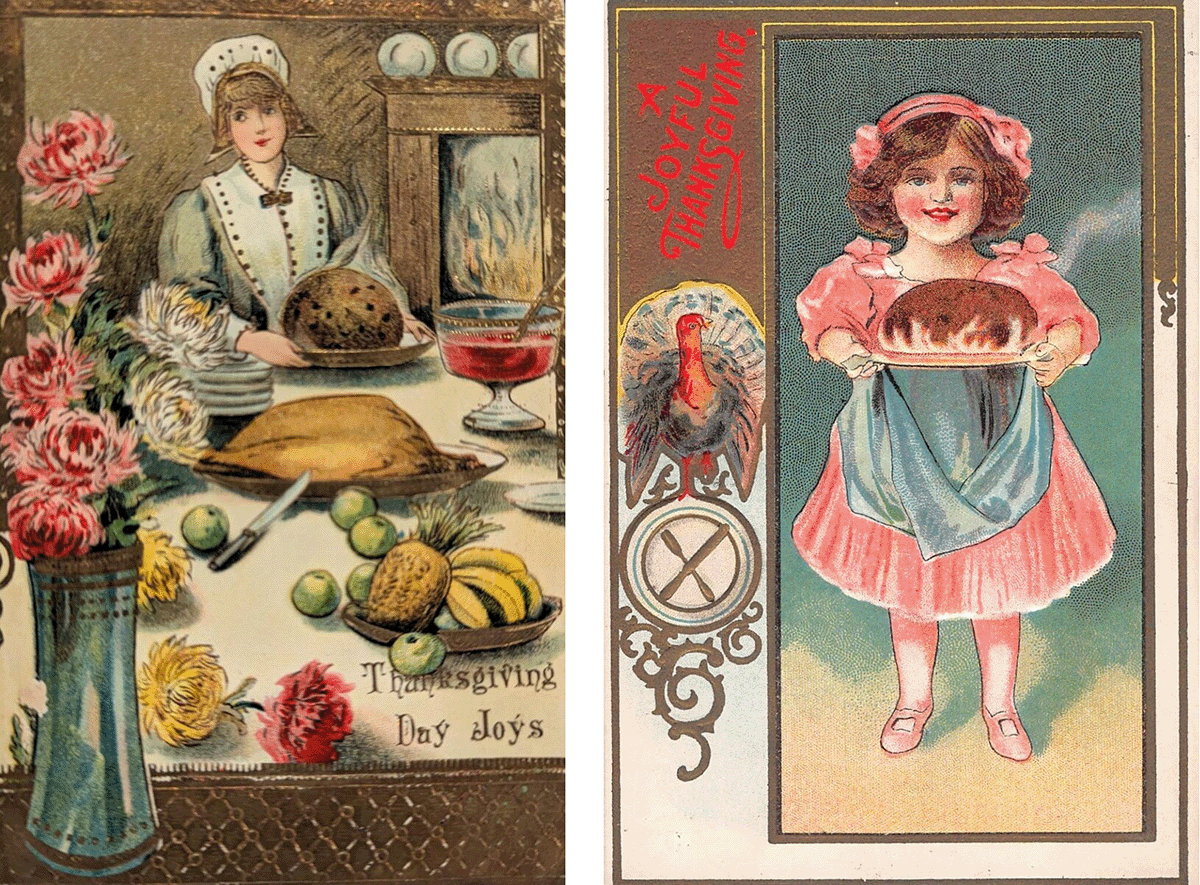
Like goose, these dishes were central to Christmas in merrie old England, so it was natural that they’d be adopted for Thanksgiving in New England. Both combined dried fruit with meat byproducts: suet in the case of plum pudding, scraps in the case of mincemeat. Both started out savory and steadily got sweeter. “At more elegant dinners in the eighteenth century,” write Curtin and Oliver, “a mincemeat pie, more savory than sweet, might appear on the table with meat in the first course. By the nineteenth century, however, even though it still contained meat, it was considered a dessert and so slid to the end of the meal.” She adds that the same happened to plum pudding. The image of a wife or daughter presenting a steaming plum pudding seems to have been a motif of early 20th century Thanksgiving cards, but ye olde desserts were soon on the way out as American tastes evolved.
Jack O’Lanterns
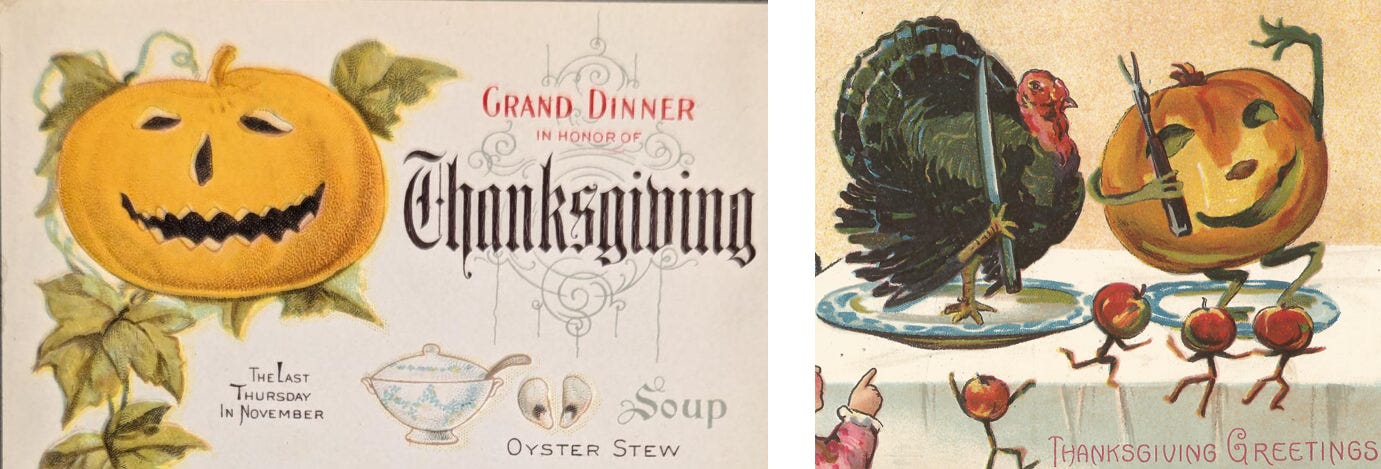
OK, you’re not supposed to eat them, but I was surprised to find carved, smiling pumpkins popping up semi-regularly in Thanksgiving imagery as the 19th century turned into the 20th. On the one hand, it makes sense, in keeping with the whole harvest celebration thing. On the other, it’s like seeing Santa Claus hiding Easter eggs. It’s a reminder of how arbitrary and transient most of our holiday traditions are. The meanings they have are the meanings we give them. That’s why what was served at the early Thanksgivings will always matter less, to us, than what was served at our early Thanksgivings.
I was in my 30s when I discovered (watching NFL players share their favorite Thanksgiving food) that Mac N Cheese is a staple of southern Thanksgiving dinner. Ever since then, it’s been a good third of my plate. What’s your favorite Thanksgiving side? Let’s dish in this week’s Shoddy Goods Chat. Let’s talk about it in this week’s Shoddy Goods chat.
—Dave (and the rest of Meh)
These previous Shoddy Goods stories are delicious steamed, braised, boiled, or served with a cream sauce:
And if you like Shoddy Goods, don’t miss Jason’s new other newsletter, Gnomenclature. Every week he digs into the 178-year-history of Hammacher Schlemmer, America’s oddest retailer. It gets weird!