

If I could go back in time and plunder a video store, I’d go straight for the weird shelves nobody ever rented from: the instructional, the ephemeral, the
”special interest”. I’m Jason Toon and this Shoddy Goods, the newsletter from Meh about consumer culture, is about one such video-historical cul de sac.
I've said it here before, but it’s hard to overstate just how revolutionary the VCR was. It’s not just that you could suddenly choose what you wanted to watch, free from the scheduling strictures of movies or TV shows, although that was seismic enough. It suddenly got a lot easier to shoot video, too. The production technology, while not exactly cheap, was orders of magnitude more accessible than it had been. Instead of competing for the same limited screen slots as everybody else, you could conceivably make an end run around the industry gatekeepers and reach an audience directly.
Once that frontier opened, all kinds of cockeyed pioneers rolled their wagons through. For every new idea that worked - celebrity workout videos or standup comedy specials - there was a Goodwill full of failed experiments. All of them probably sounded like can’t-miss ideas to someone. Like this one: what if there was a magazine on video?
“An idea whose time is coming”
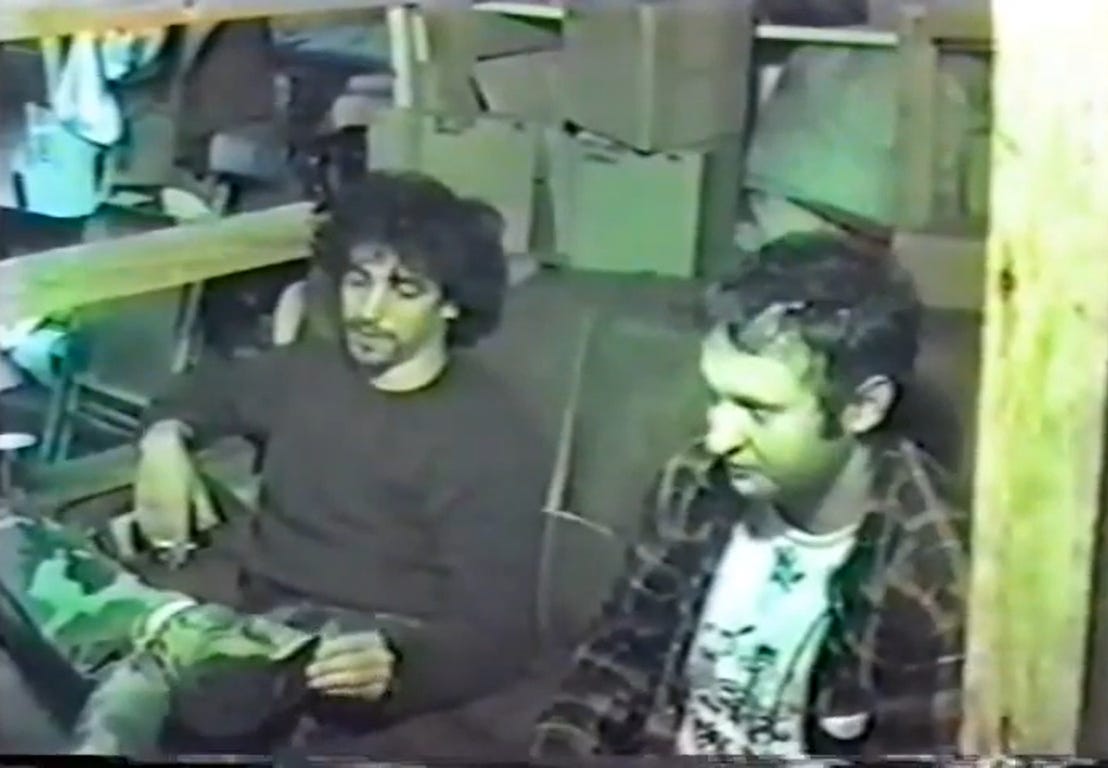
The earliest example I can find is the Flipside Video Fanzine, which first came out in 1984 and lasted ten issues. As the title implies, this was produced by the LA punk zine Flipside, one of the most popular ‘zines on the scene since their 1977 debut, and distributed pretty extensively nationwide. Mixing live performance clips, band interviews, cinéma vérité of the hardcore punk scene, and “guess you had to be there” comedy bits, the hour-long issues swing from stunning creativity and impact to impenetrable, tedious dicking around. That duality pretty much captures punk rock.
The ten issues of the Flipside Video Fanzine were treasured, copied, shared, and watched into static by the hardcore faithful. They’re historically priceless, and can be extremely entertaining if you’re into the good stuff and have the patience for the rest of it. But their camcorder production quality, not to mention the subject matter, made Flipside Video Fanzine unlikely to spawn a whole new mainstream format.
Within a few years, more professional magazines like Sport, Bon Appetit, and US News and World Report were starting to look at video versions of their own magazines. “The video magazine seems like an idea whose time is coming,” said Sport publisher Neil Cohen to Newsday in 1987, “if it hasn’t come already.”
This made a certain amount of sense: their editorial staffs were already covering these stories. They already had a base of subscribers to sell to. But it’s not like there was a shortage of this kind of stuff on TV. The case for buying and owning a random half-hour of this kind of thing was a tough one to make. Of Sport‘s 900,000 print subscribers, only 15,000 bought their Baseball Video Magazine, which folded after two issues.
The one big-money magazine that did succeed with a video version was a special case: Playboy. Let’s just say nobody subscribed to this version of Playboy for jazz reviews or interviews with John Cheever.
But what about a completely new video magazine, one that wasn’t trying to be a VHS translation of a print publication? A native video periodical, built for the form from the ground up, and that built its subscriber base from zero? One guy was just crazy enough to take that on. As Herculean a task as that sounds, he had revolutionized both TV and the music industry a few years earlier. Why couldn’t that happen again?
“Too long and boring”
“Overview will be the flagship of our video-publishing empire,” Michael Nesmith told the Dallas Morning News in 1987, adding that his new VHS magazine would “have a Rolling Stone edge to it.” This was the same Nesmith who’d gone from stocking-cap-wearing Monkee to technology and entertainment mogul. After releasing some of his solo albums in video form, he created a show called PopClips for Nickelodeon in 1980, which was then sold to Time-Warner and mutated into MTV.
Nesmith’s latest vision wasn’t just a magazine that moved, but also one about the burgeoning home-video culture. “Now is the time because the VCR population has really increased,” he said. “People are finding all different types of uses for their VCRs. It’s not just a place to watch David Letterman in the morning and home movies.” By including commercials, he hoped to keep the retail price to $3.95, rock-bottom in a time when new release movies could cost up to $80.
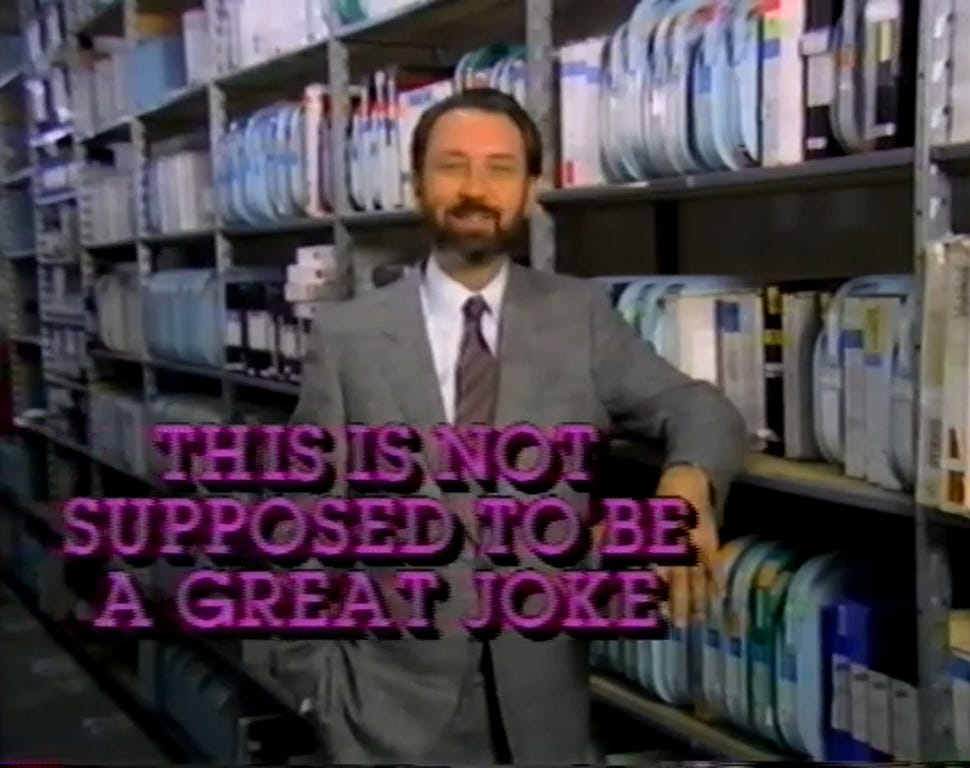
Overview #1 certainly isn’t short of “different”. In between more straightforward segments reviewing new VHS releases and video cameras are several absurdist “Ambient Videos” like “The Good Listener” (a man in a sweater nodding sympathetically at the camera) and “The Lobby Camera” (a grainy black-and-white sweep through an office building lobby). Elsewhere, the “Video Watchdog” “busts” movies that have been released in altered form, and the “Video Martyr” reviews bottom-shelf releases like How to Strip for Your Boyfriend.
The audience is invited to participate by sending in “video letters”. Nesmith announces a contest: direct a video depicting a corny joke in the style of a famous director. Then he shows us an example of how Ingmar Bergman would handle the one about how the car got into the dining room (it took a left at the kitchen). Even the reviews take some inventive turns, as when a gaggle of kids review new children’s releases.
It’s all amusing enough, mostly thanks to Nesmith’s dry, mischievous sense of humor. But it’s hard to figure out who exactly it’s for, who would pay for 90 minutes of it every month. Nesmith’s sense that something was happening with video was right, but how that translated into essential viewing proved harder to pin down. To be fair, nobody could accuse him of overselling it: “It is not designed to be watched in one sitting,” Nesmith told the Morning News. “It’s too long and boring.” A table of contents on the back cover was supposed to facilitate flipping through, like a magazine, but fast-forwarding tape is like a lot more effort. Nesmith’s imperial dreams came to naught this time: Overview didn’t make it to a second issue.
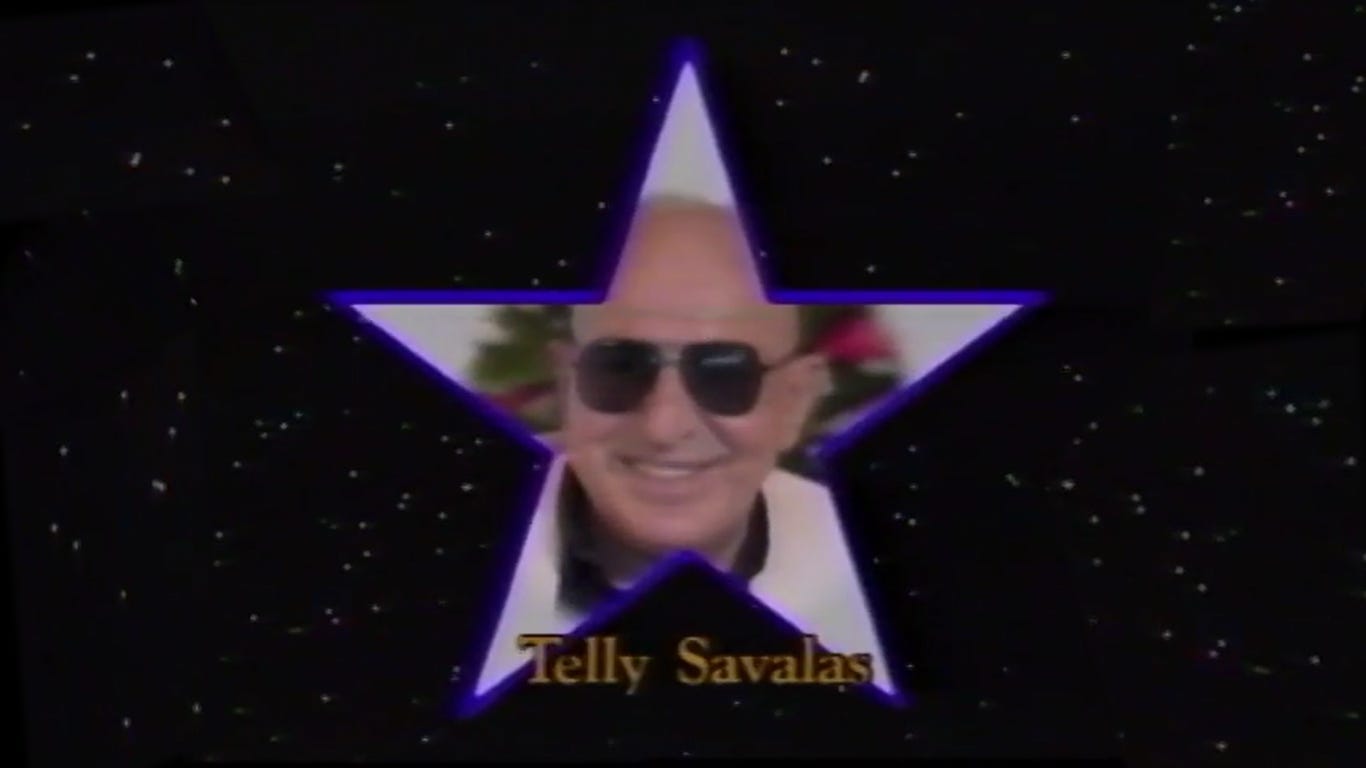
Other attempts to make mainstream video magazines met similar fates. Persona appears to have lasted for three issues of its transparently People-style celebrity features. (How many seconds with a thesaurus did it take them to land on that name?) But its underpowered star coverage hardly seems worth the effort of unwrapping the tape, let alone sitting in front of it for 100 minutes. Anyone in 1989 clamoring for pieces like “Telly Savalas on Kojak and kids” and “Marsha Mason lends a helping hand” would’ve gotten more than their fill from the daily broadcast of Entertainment Tonight.
Back to the underground
As it would turn out, Flipside Video Fanzine - which published more issues than Overview, Persona, and Sport Baseball Video Magazine combined - would point the way. To make a video magazine work, you needed:
Subject matter with audiovisual appeal, for
A rabid audience big enough to sustain it, with
An interest that wasn’t being served by mainstream media, so had developed
Its own distribution networks.
A hungry enough audience didn’t mind lower production values if you brought them something they couldn’t see anywhere else, and if you had a way to get the tapes to them. The longest-lived video magazine, 411VM, checked every one of these boxes. Showcasing skateboarding videos at a feasible pace of four issues per year, 411VM sold through the skate shops that had popped up in every town by its first issue in 1993. Since there was nowhere on TV to watch this stuff, skating videos were already huge with this audience; 411VM was just the first to come out on a regular schedule and call itself a magazine.
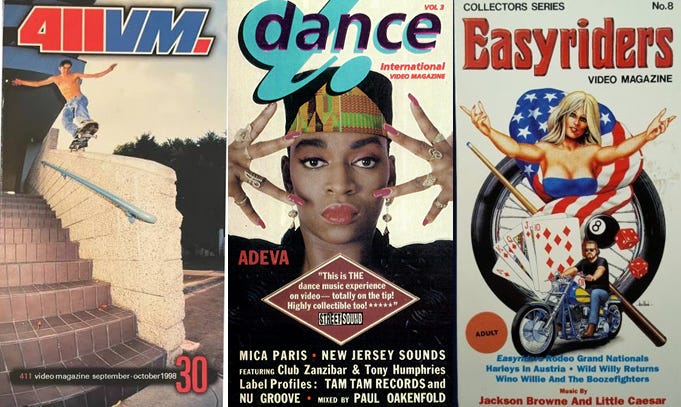
Video magazines served other diehard subcultures during these years, from bikers (Easyriders) to gearheads (Musclecars Plus) to dance music (Dance International, from the makers of MetalHead and Slammin’ Rap). As the home video series became a thing on its own, a la skate videos, the “magazine” framing started to fade. The Internet was growing, sucking up some of the energy from the real-life communities that sustained these scenes. Also, by the late ‘90s, the entertainment industry discovered the underground and plucked the unlikeliest new stars from it, like when MTV found some fearless goofballs in the CKY and Big Brother skate videos and made them stars with Jackass.
411VM outlasted them all. Eventually switching to DVD, it survived until its 87th issue in 2005 - coincidentally, the same year a new online video platform was founded called YouTube. You can watch almost all of these video magazines there, and you don’t need a new piece of furniture to store them in.
I think Jason found print’s first pivot to video strategy! Seems like it went as well as it has all the other times.
As a kid I used to get Ranger Rick, and, for a while Boy’s Life. In my 20s, it was Wired. And as an adult I occasionally try, and then fail, to keep up with the New Yorker. I don’t know that any would’ve made good tv shows. What magazines have you subscribed to? Any you still get? Let’s hear about ‘em in this week's Shoddy Goods chat.
—Dave (and the rest of Meh)
These previous Shoddy Goods stories are not available in video form (yet?):
And if you like Shoddy Goods, don’t miss Jason’s new other newsletter, Gnomenclature. Every week he digs into the 178-year-history of Hammacher Schlemmer, America’s oddest retailer. It gets weird!